


python實現(xiàn)S-N曲線,P-S-N曲線 
S-N曲線是什么?S-N曲線,也稱為應(yīng)力-壽命曲線,是疲勞分析中最基本的工具。它描述了結(jié)構(gòu)在循環(huán)載荷下,應(yīng)力水平(S) 與至失效的循環(huán)次數(shù)(N) 之間的關(guān)系。常用數(shù)學(xué)表達式: 對公式兩邊取對數(shù),得到線性方程: 使用最小二乘法對數(shù)據(jù)點進行線性回歸,擬合出最佳直線即可獲得S-N曲線。
2211
gr_01 ??? 7月前
在Ncode中如何創(chuàng)建材料的S-N疲勞曲線 
在Ncode中創(chuàng)建屬于我們自己學(xué)習(xí)或工作需要用到的疲勞 S-N 曲線庫可以幫助我們節(jié)省很多時間,用到哪個材料S-N曲線就調(diào)用哪個,操作上會更方便。本次就以IIW標(biāo)準(zhǔn)中的鋁合金材料S-N曲線作為案例的設(shè)置背景 。 流程操作相對比較簡單,比較難理解的地方是數(shù)據(jù)的填寫。
4212 1 2
SimYoungC ??? 1年前
保姆級教程|“貌離神合”的海工結(jié)構(gòu)疲勞分析中的S-N曲線和斷裂力學(xué)方法 
• 同S-N曲線一樣,近年來裂紋擴展曲線的獲得也進行了大量試驗。在實際應(yīng)用中“設(shè)計S-N曲線”是將“平均S-N曲線”向“下”移動兩個標(biāo)準(zhǔn)差來獲得97.7%的“存活概率”(考慮試驗數(shù)據(jù)呈正態(tài)分布)。
2908
安世亞太 ??? 4年前
碳纖維樹脂基層合板除了試驗的方法外,怎樣獲得其S-N曲線?
已知同材料不同鋪設(shè)角度的另一層合板的S-N曲線,能對其進行折算嗎?
2232 1
用戶_39952 ??? 2年前
求助fesafe,S-N曲線數(shù)據(jù)怎么輸入?
我復(fù)制了材料庫的304材料,想修改一下其中的sn曲線,填完數(shù)據(jù)說我數(shù)據(jù)違反了數(shù)據(jù)輸入規(guī)則,應(yīng)該怎么解決呢,如圖
2498 3
M_9307 ??? 1年前
星辰技文|Abaqus中提取裂縫數(shù)據(jù)并用matplotlib庫繪圖 
副圖曲線:裂縫分布圖旁可增加顯示裂縫統(tǒng)計信息曲線圖,縫長-時間曲線,失效單元-時間曲線等。部分輸出效果如下: 【聲明】請走正規(guī)購買渠道更新插件,更新前請確保安裝了2021以上版本的Abaqus!還是老規(guī)矩:一年內(nèi)的用戶是免費更新的,超過一年,僅需20%費用。再次感謝大家的支持!
4833 20 5
星辰_北極星 ??? 2年前
JC模型python代碼繪制曲線 
設(shè)置圖片清晰度
</div><div contenteditable="false" width="100%">
plt.rcParams['figure.dpi'] = 300
</div><div contenteditable="false" width="100%"><br>
</div><div contenteditable="false" width="100%">
# 繪制不同應(yīng)變率和溫度組合下的曲線
2431 1
360克 ??? 12月前
Matlab“稍作修改”Abaqus-odb結(jié)果 | 提取三維裝配體Mises應(yīng)力 
(i).Elements(n) : corresponds to the i-th part's n-th element (struct)
% parts(i).Elements(n).Type : corresponds to the i-th part's n-th element type (string)
% parts(i).Elements
2694 2 2
易公子 ??? 1年前
FE-SAFE—強大的疲勞分析軟件 附Fe-Safe6.5安裝教程下載 
材料數(shù)據(jù)1、提供全面的材料數(shù)據(jù)庫;2、用戶可以擴展和修改材料數(shù)據(jù)庫;3、可以得到材料試驗報告;4、包括S-N曲線 和 應(yīng)變-壽命 曲線;5、可以根據(jù)材料參數(shù)繪制材料特性曲線;6、高級算法來建立實驗數(shù)據(jù)和材料特性參數(shù)的關(guān)系。下載地址:Fe-Safe6.5安裝教程
6150
知識通 ??? 4年前
如何在 COMSOL 中生成隨機表面 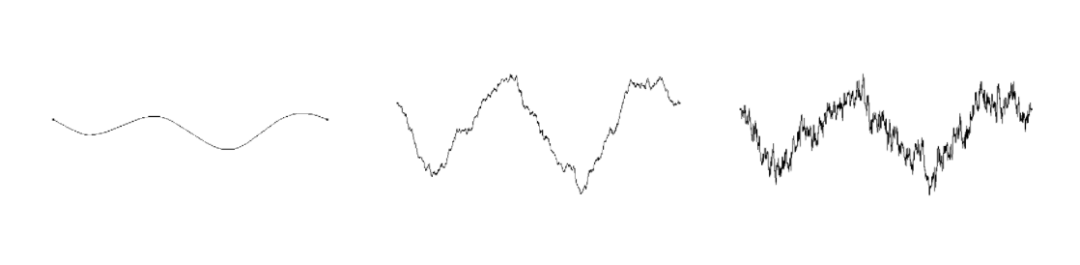
=0)||(n!=0),((m^2+n^2)^(-b/2))g1(m,n)*cos(2*pi(m*s1+n*s2)+u1(m,n)),0),m,-N,N),n,-N,N) 其中,x=s1 和 y=s2 在 0 和 1 之間變化。 系數(shù) 0.01 用于在縮放 z 方向上的數(shù)據(jù)。或者,該比例因子可以被應(yīng)用到振幅系數(shù)中去。參數(shù)化曲面幾何特征用于生成合成的隨機表面。
3462 10 2
我是小能 ??? 3年前
Bezier曲線設(shè)計渦輪葉片造型與CFD驗證解析 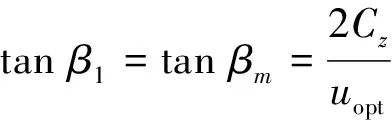
按設(shè)計給定流量34 L/s計算定子入口速度、轉(zhuǎn)子出口壓力,并作為CFD模擬的邊界條件。在流量為34 L/s時,給定轉(zhuǎn)速n,求解連續(xù)性方程、Navier-Stokes方程、k-ε紊流模型,對速度與壓力耦合采用經(jīng)典的SIMPLE算法,使用二階迎風(fēng)差分離散格式求得收斂解,獲得該轉(zhuǎn)速對應(yīng)的理論輸出扭矩T(n)和理論壓降Δp(n)。
3246 2 2
aero-engine ??? 2年前
材料應(yīng)力-應(yīng)變曲線自動繪制小程序 
基于Ramberg-Osgood計算模型1.用于常用材料應(yīng)力-應(yīng)變曲線繪制及數(shù)據(jù)擬合生成2.可繪制工程應(yīng)力-應(yīng)變曲線及輸出數(shù)據(jù)3.可繪制真實應(yīng)力-應(yīng)變曲線及輸出數(shù)據(jù)4.可繪制用于有限元分析的應(yīng)力-應(yīng)變曲線及輸出數(shù)據(jù)5.基于Python制作的.exe小程序,可直接在電腦運行
741
AutoEuler ??? 15天前
MOSFET場效應(yīng)管的分類及工作原理 
其實,轉(zhuǎn)移特性曲線和輸出特性曲線是冗余的。換言之,我們可以從一個圖繪制出另外一個圖。方法也很簡單,比如我們在右圖中,在UDS=6V位置,畫一根縱線,它和多根曲線相交,得到的點,繪制出來就是左圖(標(biāo)注UDS=6V)的曲線。又比如選擇UDS=1.2V的位置,畫一根縱線,在左圖中就會得到不同的轉(zhuǎn)移特性曲線(標(biāo)注UDS=1.2V綠線)。
2575 2 2
平頭叔 ??? 2年前
Matlab“稍作修改”Abaqus-odb結(jié)果!!! 
.Elements(n) : corresponds to the i-th part's n-th element (struct)% parts(i).Elements(n).Type : corresponds to the i-th part's n-th element type (string)% parts(i).Elements(n).Connectivity
3153 8 2
易公子 ??? 3年前
CAE小記丨常用的機械疲勞壽命評估分析方法
此外,局部應(yīng)力一應(yīng)變法要用到材料的C-N曲線,而E-N曲線是在控制應(yīng)變的條件下進行疲勞試驗而得到的,試驗數(shù)據(jù)資料比較少,不如S-N曲線容易得到,這也影響了該方法的使用。
4581 2
小白Johnny ??? 2年前
國高材分享 | 如何準(zhǔn)確獲得應(yīng)變速率0.001/s 至1000/s區(qū)間的應(yīng)力-應(yīng)變曲線 
但對于高速拉伸試驗,如果光學(xué)應(yīng)變測量系統(tǒng)與高速拉伸試驗機數(shù)據(jù)采集開始時間相差幾微秒,結(jié)果則會被改寫。應(yīng)變和應(yīng)力數(shù)據(jù)同步采集應(yīng)變采集相對于應(yīng)力采集提前0.000024s那么如何做到數(shù)據(jù)同步采集,不同的設(shè)備,處理細節(jié)不一樣。在此需要提到同步觸發(fā)的概念,設(shè)備采集數(shù)據(jù),需要獲得一個觸發(fā)指令,才開始采集數(shù)據(jù),找到觸發(fā)信號,也就掌握了數(shù)據(jù)同步采集了。
3014 2 1
國高材高分子材料產(chǎn)業(yè)創(chuàng)新中心 ??? 1年前
OCAD應(yīng)用:凸輪曲線優(yōu)化設(shè)計 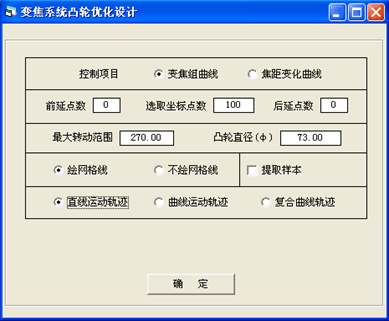
圖3.控制項目的選擇圖4.控制焦距變化曲線系列Ⅱ- 繪制網(wǎng)絡(luò)線的選擇圖5.繪制網(wǎng)絡(luò)線的選擇圖6.繪制網(wǎng)絡(luò)線的選擇Ⅲ- 凸輪曲線運動軌跡或變焦焦距變化規(guī)律的選擇圖7.凸輪曲線運動軌跡或變焦焦距變化規(guī)律的選擇圖8.選擇單純曲線方式圖9.選擇復(fù)合曲線方式Ⅳ- 提取變焦過程中任意樣本的選擇圖10.提取變焦過程中任意樣本的選擇
1692
信光嗎 ??? 2月前
單原子分散的Ir-N-C燃料電池陽極抗中毒催化劑 
(B)商業(yè)Pd/C 的 CV 曲線,電解液為 0. 1 mol/L HClO4/0. 5 mol/L HCOOH 溶液,掃速為 20 mV/s。(C)Ir-C的 CV 曲線,電解液為 0. 1 mol/L HClO4 溶液,掃速為 20 mV/s。
4256
化工加 ??? 3年前
大佬們,小白求助,workbench中S-N曲線的參數(shù)在哪里看。如圖所示

1713
不合格做題家 ??? 4年前
30歲的你正值壯年,但同齡的飛機已垂垂老矣 
進一步,他以應(yīng)力幅度(S,Stress)為縱軸,以循環(huán)次數(shù)(N,Number of Cycles)為橫軸,繪制了著名的S-N曲線。一百多年后的今天,S-N曲線依然是結(jié)構(gòu)疲勞分析最基礎(chǔ)和最常用的方法。尤其對高周疲勞,即循環(huán)次數(shù)高于10000次的低應(yīng)力循環(huán),百試不爽。各行各業(yè)都有自己的材料手冊,都是百年來人們和疲勞斗爭的智慧結(jié)晶。知道了應(yīng)力幅值,查表就能得到疲勞壽命。
2282
天洑軟件 ??? 8月前
20條/頁 
 93
93 跳至頁


技術(shù)鄰APP
工程師必備
工程師必備
- 項目客服
- 培訓(xùn)客服
- 平臺客服
TOP
